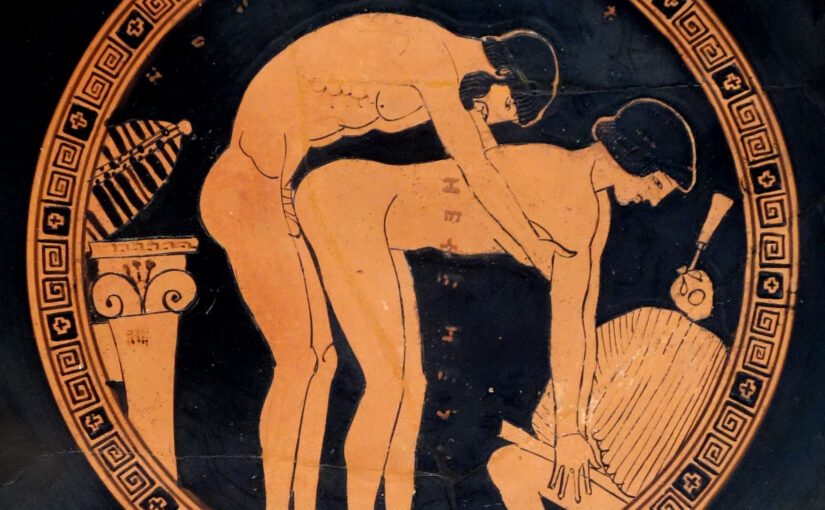
Travelers have always come to the Mediterranean in search of secret knowledge: the unblended wine, the cove no guidebook has yet betrayed, the recipe in which sunlight, salt and stone seem to have been quietly folded together. Yet of all the quests that have drawn outsiders to these shores, none is older, more universal, or more touchingly optimistic than the search for substances that might persuade the body to love.
Long before pharmacology existed as a science, the peoples of the inner sea pursued aphrodisiacs with the same gravity they brought to philosophy, architecture and conquest. Some of their remedies were charming and largely symbolic. Others were frankly murderous. Together they form a curious archive of human longing, an accidental history of how civilizations have imagined the chemistry between bodies.
Consider the oyster, that briny mollusk over which Rome lost its head. Pliny the Elder catalogued it; Juvenal mocked the appetites it served; later, Casanova, ever a man of disciplined excess, is said to have swallowed fifty of them every morning, as though the day’s pleasures were a campaign that required provisioning at dawn. The myth was hardly arbitrary. Aphrodite herself, after all, had risen from the sea foam, and the oyster, with its closed and secret architecture, seemed a small reliquary of her element. Modern nutritional science offers a polite half-nod: oysters are unusually rich in zinc, a mineral implicated in the production of testosterone. The basis for the legend is real, if modest. Anyone, however, who imagines that a platter of cold shells will conjure Casanova by lunchtime mistakes the nature of the magic. The romance of the oyster has always belonged less to pharmacology than to ritual, to the theatre of consumption, to the strange intimacy of swallowing something raw and alive at a candlelit table.
If the oyster is the emblem of Mediterranean optimism, Spanish fly is its desperate twin. The name itself is a small fiction: the substance is neither Spanish nor a fly, but the powdered remains of blister beetles, chiefly Lytta vesicatoria, whose bodies yield a vicious compound called cantharidin. From classical Greece through medieval Europe, this dust was scattered into wines and tinctures with the hope of stirring passion. What it stirred, in fact, was the urinary tract, inflaming the tissues and provoking the painful, prolonged erections that pre-modern observers mistook for the body’s enthusiasm. The line between the effective dose and the lethal one was vanishingly thin; the historical record is strewn with the dead, who had hoped for an evening of pleasure and received instead organ failure. That such a substance still surfaces today, behind the glassy euphemisms of online “natural” supplements, is a small reminder that credulity, like desire, is among the more durable human inheritances.
The Greeks, for their part, preferred to read the world’s body as a kind of legible text. Their Doctrine of Signatures held that a plant’s outward form disclosed its inward virtue, and certain wild orchids, particularly Orchis mascula, were therefore suspected of carrying secrets that needed no decoding. The paired, fleshy tubers of these flowers bore an unmistakable anatomical resemblance, and Theophrastus and Dioscorides dutifully recorded their tonic properties in the great pharmacopoeias of antiquity. The linguistic residue is with us still: the word orchid descends directly from the Greek órkhis, meaning testicle, so that every florist’s window today is unknowingly stocked with a botanical pun of considerable antiquity. The bulbs themselves, modern chemistry concludes, are little more than starch. But the symbolism endured long enough to christen an entire family of flowers after male anatomy, which is perhaps a more lasting monument than any pharmacological effect could have offered.
No plant, however, accumulated quite as much mystique as the mandrake. Its thick, forked root, suggestive of a small human figure, was the Doctrine of Signatures rendered uncannily literal. The Bible itself bears witness to its reputation: in Genesis, Rachel and Leah bargain over a handful of mandrakes, trading the roots for a night with Jacob in a transaction where fertility, desire and household politics knot themselves into a single domestic drama. Across the ancient Near East the plant appeared in love potions, sacramental wines and magical rites, and medieval folklore later insisted that it screamed when uprooted, killing the gardener foolish enough to hear it. Behind the legend stood a real chemistry: mandrake contains tropane alkaloids, cousins of those in deadly nightshade, capable of sedating in small measure and killing in slightly larger ones. It is a useful symbol of the knife-edge on which ancient remedy so often balanced, healing and harm being separated by no more than a careless hand.
Beside such gothic preparations, asparagus seems almost embarrassingly wholesome. And yet this slender vegetable appears in Egyptian love poetry, on Roman tables and in the medical writings of Galen, who in the second century commended it for “stirring Venus.” The reasons were not difficult to assemble: asparagus is nourishing, its form unmistakably suggestive, and the act of dining well in agreeable company has always been the most reliable overture to intimacy. Here perhaps is the quiet truth that the ancients glimpsed without quite articulating: that desire is rarely summoned by a single ingredient, but coaxed by the entire scene around it, the candles, the conversation, the slow attention paid to a shared plate.
What unites these remedies, from the oyster’s pearled interior to the mandrake’s screaming root, is a worldview in which nature was assumed to be in continual conversation with the human body. The ancient Mediterranean possessed no clinical trials, but it had the Doctrine of Signatures, the theory of humors, and an enduring conviction that the cosmos had hidden a solution inside every problem it posed. Modern science, more reticent, finds the evidence thin. Oysters offer a real if modest nutritional dividend; Spanish fly and mandrake are simply dangerous; orchid bulbs and asparagus are agreeable and unremarkable foods. The true power of these substances lay less in their chemistry than in their symbolism, in the rituals that surrounded them, in the small but resilient theatre of belief.
Still, to dismiss the catalogue as mere superstition would be to miss its quieter dignity. The history of aphrodisiacs is, after all, a history of how civilizations have thought about bodies, appetite and the porous boundary between the natural world and the inner life. The echoes persist: a plate of oysters on a Greek island in late afternoon, the bitter green of wild asparagus at a Roman market stall, the dusty perfume of herbal liqueurs in a Levantine apothecary. They are reminders that desire has always been one of the things the Mediterranean has known how to season, even when, as in the case of the blister beetle, the seasoning was best left in the cabinet of medical curiosities, where history has at last had the decency to lock it away.
🌹✨ Ancient Mediterranean Love Potion (Magical Version) ✨🌹
Servings: 2 small goblets
Prep & Ritual Time: 15–20 minutes
Ingredients 🧪
- 2 cups water 💧
- 1 tbsp dried rose petals 🌹 (love & beauty)
- 1 tsp dried hibiscus 🌺 (passion & allure)
- 1 tsp dried lavender 💜 (calm & romance)
- 1/2 inch fresh ginger 🫚 (warmth & spark)
- 2–3 pomegranate seeds 🍎 per cup (fertility & desire)
- 2 tsp honey 🍯 (sweetness & charm)
- Optional: 2–3 saffron threads 🌟 (luxury & magical energy)
- Optional ritual tool: a small gold or silver spoon ✨
Instructions 🔮
- Prepare the Magical Cauldron 🥣
Bring 2 cups of water 💧 to a gentle simmer. As it warms, whisper your intention:
“Let love and warmth flow through this potion.” 💖 - Enchant the Herbs 🌿
Add rose petals 🌹, hibiscus 🌺, lavender 💜, ginger 🫚, and saffron 🌟 to the water. Stir clockwise 7 times with your spoon ✨ to draw positive energy. - Steep the Potion 🕯️
Cover the cauldron and let it steep for 5–10 minutes. Watch the water change color—it should glow like a sunset 🌅 in your cup. - Sweeten & Empower 🍯
Strain the herbs into your goblets. Stir in honey 🍯 while thinking of the qualities you wish to attract: love 💞, passion 🔥, harmony 🌈. - Add Seeds of Desire 🍎
Drop 2–3 pomegranate seeds into each cup. Imagine each seed carrying your intentions into the universe 🌌. - Final Ritual ✨
Hold the cup in your hands, close your eyes, and breathe deeply. Visualize your heart opening like a blossoming rose 🌹. Sip slowly, letting warmth and magic flow through you 💖🔥.
Optional Magical Touches 🕊️
- Light a candle 🕯️ nearby to enhance the ambiance.
- Play soft Mediterranean or classical music 🎶 to stir emotion.
- Sprinkle a tiny pinch of cinnamon 🌿 over the top for extra “spark.”
- Serve in glass goblets 🏺 to feel like an ancient temple ritual.
💡 Fun Secret: Drinking it together with someone can be symbolic of connection and shared intention—but even drinking it alone is a powerful self-love potion. 🌸
Header: Attic red-figure kylix (drinking cup) with erotic scene. Artist: Douris (attr. Beazley). Photographer: Mark Landon.