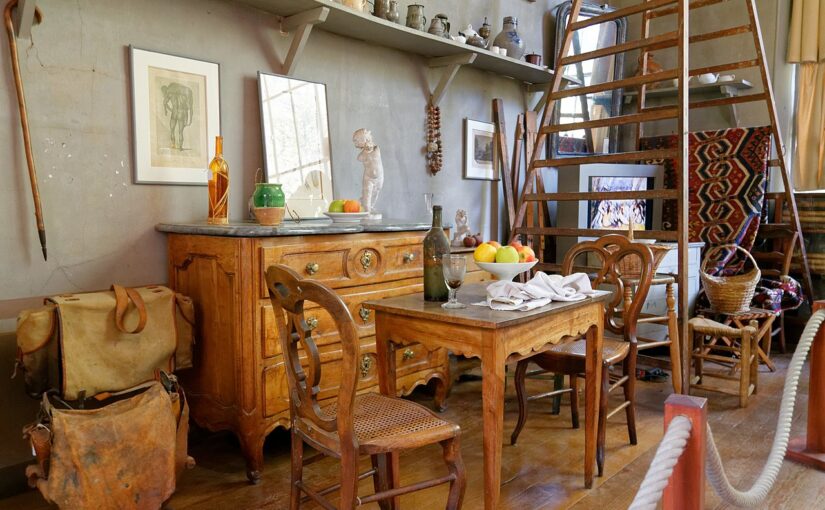
Some thirty-five kilometres north of Marseille, where the Mediterranean wind softens into something gentler and the light begins to acquire that famous amber hue, lies Aix-en-Provence. A city of barely 150,000 souls, its name alone seems to promise a certain civility, a pastoral grace, the murmur of fountains beneath plane trees. For more than two thousand years, this corner of Provence has been coveted, settled, contested, and adored, and the reasons are written into its very stones.
Its origins flow, quite literally, from water. The thermal springs that still bubble beneath the city first drew the Celts, who built an oppidum upon the site. In 122 BC, after Roman legions had dismantled that Celtic stronghold, the consul Caius Sextius Calvinus laid out a new, methodical town and gave it a name that read like a small biography in Latin: Aquae Sextiae Saluviorum, the waters of Sextius, in the land of the vanquished Salluvians. Aix can claim, with quiet pride, the distinction of being the oldest Roman city founded in Gaul. The springs that justified its existence have never ceased to shape its temperament, its rituals, its architecture.
Even now, water is the city’s secret signature. Some two hundred and fifty fountains, public and private, trickle and gush through its squares and courtyards, lending the place a sound as unmistakable as its light. Above the Roman baths, the Thermes Sextius offers a contemporary echo of that ancient cult of immersion, a reminder that certain pleasures resist the centuries.
Aix grew into itself during the Middle Ages, becoming the seat of a bishop and, later, an archbishop, and from 1182 the capital of the Counts of Provence, a dignity it carried until the Revolution swept such titles away. Its university, founded in 1409, gave the city an intellectual nerve that has never gone slack. Today nearly forty thousand students drift through its cafés and cloisters, ensuring that the streets are never entirely surrendered to nostalgia.
And yet, for all this history, Aix in the twenty-first century is increasingly defined by a single restless ghost: that of Paul Cézanne, who spent almost the whole of his life here and who is now, belatedly, being clasped to the city’s bosom with a fervour that borders on the penitent.
Cézanne was a son of privilege, the child of a businessman who had reinvented himself as a banker and who regarded his son’s vocation with the indulgent contempt reserved for foolish ventures. The painter spent his career trying to satisfy two impossible audiences: a sceptical father and a Parisian art world that found his canvases unsettling, unfinished, peculiar. The astonishing thing is that he seems never quite to have convinced himself either. At La Bastide du Jas de Bouffan, the family’s country estate on the western edge of town, he painted directly onto the walls and then, in fits of dissatisfaction, painted over them. Works that now command silent crowds in museum halls were once judged by their own maker as not worth keeping.
One of those wall paintings shows his father seated, absorbed in a newspaper, his face turned aside. It is a portrait of refusal, of a gaze that will not meet the painter’s own, and it tells a story that no biography quite manages to phrase so economically. Against the chill of paternal indifference, Cézanne placed two great affections: his mother, whom he loved unreservedly, and the landscape itself. He fled often into the forests beneath the Montagne Sainte-Victoire, that hulking, ochre-shouldered mountain which he painted eleven times in oil and sixteen in watercolour, until its very facets began to anticipate the geometries of Cubism. He did not merely depict the mountain; he interrogated it, broke it open, and in doing so quietly dismantled four centuries of Western perspective.
The Bibémus quarry, whose pale stone built much of Aix itself, was among his favoured haunts. Walkers and cyclists pass through it now, perhaps without registering that the angular cliffs around them were once the schoolroom in which a difficult man taught modern art how to see.
That modern art took some time to thank him. Paris, with its instinct for posthumous tact, mounted a memorial exhibition of fifty-six works at the Salon d’Automne in 1907, only a year after his death. Aix, meanwhile, looked the other way with admirable consistency. Auguste-Henri Pontier, curator of the Musée Granet from 1892 to 1925, made it a point of professional honour never to hang a single Cézanne while he drew breath, and he kept his word with the grim satisfaction of a man defending civilisation from a vandal. Real reconciliation between the city and its prodigal genius had to wait until 2006, a full century after his death. In 2025, Aix declares the Year of Paul Cézanne, elevating its once-disowned son into a kind of municipal patron saint, the emblem of a creativity it took the town rather a long while to recognise.
The centrepiece of this rehabilitation is the restoration and reopening of the Bastide du Jas de Bouffan itself. In Provence the word bastide does not summon a fortified medieval bourg, as it might elsewhere, but something altogether more genteel: a country house of some elegance, set among its own gardens. When Louis-Auguste Cézanne bought the property in 1859 as a secondary residence, it stood just outside the city walls, on fifteen hectares of ornamental pools, garden paths, and unobstructed views toward Sainte-Victoire. By around 1870 the family had moved in for good, and for nearly forty years, until the estate was sold in 1899, the bastide served as Paul’s refuge, studio, and inexhaustible subject.
Here he painted the portraits whose intimacy still startles, the still lifes whose apples have outlived empires, and the landscapes in which the Provençal light seems almost to weigh something. The cypress alleys, the olive trees, the garden in its shifting seasonal humours: all of it entered his vocabulary and, through him, the vocabulary of everyone who came after.
The estate then fell into the long sleep of neglect that often befalls places too saturated with meaning to be casually inhabited. In 2017 the Aix city council voted to wake it, and by 2026 the so-called Cézanne House is to open as a careful reconstruction of the painter’s nineteenth-century world, kitchen and studio and park restored to something approaching the rooms he knew. A research and documentation centre is to follow, gathering the scholars who now arrive in pilgrimage where once the locals crossed the street.
After his father’s death in 1899, the bastide was sold, and Cézanne never returned. He could not bring himself to. It is the kind of ending one might call novelistic if it were not simply true: a man severed from the rooms that had made him, walking the same streets but never again that particular gravel path. The city that ignored him in life now restores his garden with the meticulous devotion of an heir making amends. Whether such gestures reach the dead is a question Aix, with its fountains and its long memory, seems content to leave unanswered.
Cézanne sites
Atelier Cézanne — Cézanne’s preserved studio, one of the essential visits in Aix.
https://www.atelier-cezanne.com
Aix-en-Provence tourism page on Cézanne — official city/tourism overview of the main Cézanne places.
https://www.aixenprovencetourism.com/en/aix-en-provence-en/paul-cezanne/
Bastide du Jas de Bouffan — Cézanne family home and major site in his life and work.
https://www.cezanne-en-provence.com/en/the-cezanne-sites/bastide-du-jas-de-bouffan/
In the steps of Cézanne — city walking route through Aix linked to the artist’s life.
https://www.aixenprovencetourism.com/en/activities-and-attractions/hiking-and-themed-tours/in-the-steps-of-cezanne/
Museums and landmarks
Musée Granet — important museum stop for Cézanne works and exhibitions.
https://www.museegranet-aixenprovence.fr/en/collections/collections/from-cezanne-to-giacometti
Saint-Sauveur Cathedral — part of the historical Cézanne trail in Aix.
https://www.aixenprovencetourism.com/en/aix-en-provence-en/paul-cezanne/
Saint-Pierre Cemetery — Cézanne’s burial place.
https://thegoodlifefrance.com/finding-cezanne-in-aix-en-provence/
Useful route info
Cézanne in Aix tour info — guided city tour dedicated to the painter.
https://provence-alpes-cotedazur.com/en/get-inspired/destination-provence-alpes-cote-dazur/aix-en-provence/
Suggested Cézanne Walking Day in Aix
Here’s a neat 1-day walking itinerary for Cézanne in Aix-en-Provence, using the city-center route first and then the studio on the hill. The walk starts in the historic core, then moves into the Mazarin district, and ends at Cézanne’s studio, which matches the official “Cézanne’s Footsteps” route through the city.
Morning: old town and landmarks
Start at Place de la Rotonde and walk up Cours Mirabeau, where Cézanne-era Aix is most visible in the architecture and cafés.
Stop at Les Deux Garçons for coffee or a drink; it is specifically mentioned in the Cézanne-themed city walk.
Continue through Passage Agard to the Palais de Justice and then to Hôtel de Ville.
Walk to Saint-Sauveur Cathedral, a major historic stop on the Cézanne trail and a meaningful place in his life story.
Lunch break
Have lunch in the old town or around Cours Mirabeau, which is the most convenient area for a walking day.
If you want a museum stop before lunch, Musée Granet fits well here and is one of the key Cézanne museums in Aix.
Afternoon: art district and studio
Head into the Mazarin quarter and visit Musée Granet if you did not already stop there in the morning; the museum’s Cézanne-related collections make it a core part of the itinerary.
Pass by Hôtel de Caumont if you want an extra art stop in a beautifully restored townhouse.
Finish with Atelier Cézanne, his preserved studio on the city’s heights, which is one of the most important places on the route.
Optional end stop
If you still have energy, make a short final stop at Saint-Pierre Cemetery, where Cézanne is buried.
This works best as a quiet closing stop after the studio rather than before it.
Helpful links
Official city Cézanne walk: In the steps of Cezanne
Aix tourism Cézanne page: Paul Cézanne in Aix-en-Provence
Atelier Cézanne: atelier-cezanne.com
Musée Granet Cézanne collections: musée GranetA simple route order is: Place de la Rotonde → Cours Mirabeau → Saint-Sauveur Cathedral → Musée Granet → Mazarin quarter → Atelier Cézanne, which gives you the best balance of city history, art, and Cézanne sites in one day.
Header image: Atelier Cézanne in Aix-en-Provence. Bjs.