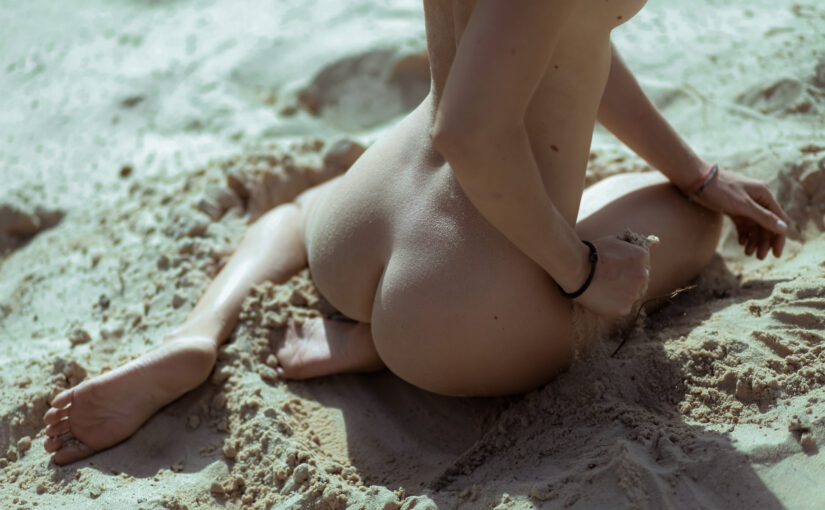
There is a particular hour along the Mediterranean, somewhere between the late morning and the indolent middle of the afternoon, when the light no longer falls upon the sea so much as inhabits it. The water turns a colour that pre-modern painters could only approximate, and the sand, having absorbed the sun since dawn, gives back a steady, almost animal warmth. It is in this hour that the body, freed from the small humiliations of fabric, slips from salt water onto sun-warmed shore without a barrier, and lies down as nature intended, letting the sun soak into bare skin with a freedom so pure it feels almost illicit. The illicitness, of course, is an inheritance, not an essence. The Mediterranean has been watching its bathers undress for several thousand years, and finds the spectacle entirely unremarkable.
To speak of nudism in this part of the world is to speak less of a fashion than of a quiet, recurring rite. From Spain’s long, shimmering beaches to the rocky coves of Greece and the wild islands of Croatia, naturism is not merely a hobby but a way of life, an act of liberation, a doorway to bodily acceptance. The phrase “way of life” is the right one, with its faint echo of philosophy. The Greeks, who invented so much, did not invent shame at the body; that was a later import, smuggled in among other goods. What the Mediterranean has always offered, and offers still, is the chance to step briefly outside that import economy and remember an older syntax of the self.
The pleasure is, first of all, sensual in the strict and unromantic sense. The point is not nakedness for its own sake but the feeling of lightness, of being unencumbered and truly alive, the sea touching every curve, the sun on emerging like a warm hand pressed against the skin. There are, naturally, the usual practical dividends: vitamin D for bones and immunity, the absence of tan lines, a body freed from constricting cloth and moving with new ease. But the deeper reward is psychological, even quietly political. To shed clothes can mean shedding insecurities; naturism offers a lesson in self-acceptance, both in company and in solitude. As the saying goes among its practitioners, showing yourself naked to others and to yourself allows you to better embrace your body, and a single afternoon at the shore without barriers can do more for the soul than a month of mirrored gymnasiums.
Yet each coastline of this inland sea has its own dialect of disrobing, and the literate traveller learns to listen for the difference.
Spain conjugates the verb most fluently. Renowned for its easygoing attitude, the country has woven nude bathing into the very fabric of coastal life along its Mediterranean and island shores. Public nudity is legal, though local rules vary; Spanish naturism has deep roots, having weathered both repression and renaissance, and modern Spain celebrates the right to meet nature unclothed. The geography of the practice is wonderfully various. In nudist urbanizations such as Vera Playa, in Almería, being naked is the daily norm rather than a special event, an entire small civic life conducted without trousers. Further along, the wild bay of Bolonia in Cádiz unfurls between dramatic dunes; Mallorca offers the pristine, almost Caribbean clarity of Es Trenc and the secluded crystal of Cala Torta; and in the city itself, the Platja de la Mar Bella in Barcelona proves that the urban and the unclothed can coexist with an almost Catalan matter-of-factness.
France, predictably, has elevated the matter into a doctrine. No country celebrates the art de nu quite like France along its azure Mediterranean shore, where public nudity is legal and celebrated on designated beaches, with dozens of official resorts, many run by clubs or municipalities ensuring family-friendly environments and amenities for all. There is, characteristically, an institutional flair: Cap d’Agde in Languedoc styles itself a “Naked City,” world-famous and fully equipped; the Île du Levant makes nudity compulsory on the Plage des Grottes; the Plage de l’Espiguette stretches long, wild and unspoiled; and Tahiti Beach near Saint-Tropez offers a chic, vibrant variant for those who prefer their liberty in a slightly more theatrical mode. The French manage, as ever, to make a republic of the body. Children and families are the norm rather than the exception; nudity outside designated zones is not always permitted; and one greets one’s neighbours with a nod, never with a camera, that last commandment being perhaps the truest expression of secular civility.
Italy plays the game more obliquely, as Italy will. Its dramatic coastline hides plenty of naturist treasures, but finding them can feel like a local’s secret; only a handful of “spiagge naturiste,” marked FKK or nudista, are fully legal, while many more are quietly tolerated, with the best beaches often lying far from the city crowds. There is something fitting in this discreet geography, this preference for the unmarked path. Capocotta near Ostia services Rome with bracing nonchalance; Guvano in Cinque Terre rewards the determined with hidden, rustic splendour; and on the further fringes, the black sand of Acquarilli on Elba and the protected dunes of Piscinas in Sardinia offer a kind of solitude that feels older than tourism. One brings a towel, observes etiquette, and remembers that Italian naturist gems reward those who value discretion.
Croatia is the great elder of the practice, and wears the role with quiet authority. It is the Adriatic’s naturist pioneer, with a movement dating to the 1930s; Rab Island opened mainland Europe’s first official nudist beach, a piece of cultural history one rarely finds in the standard guidebooks. Full nudity is permitted only in designated FKK zones and resorts, though topless sunbathing is common everywhere, a distinction that captures the peculiarly Central European seriousness about Freikörperkultur. Koversada in Vrsar remains the oldest and largest park of its kind; Valalta near Rovinj offers sandy beauty and pools; the Pakleni Islands’ Jerolim and Stipanska are reached by boat into pristine coves; and Rab’s Kandarola endures as the historic, iconic origin point. There is a particular pleasure unique to this coast: the nudist cruise, island-hopping among private coves, sunbathing where only the dolphins keep an eye on you, which sounds like something out of a more cheerful Homer.
Greece, the very birthplace of the unclothed body as an aesthetic ideal, is paradoxically more circumspect. Its legendary islands offer some of the most stunning naturist beaches on earth, though full nudity is permitted only on officially recognised stretches, while many other spots are traditionally nudist-friendly without formal protection; on busy beaches one keeps covered, while on secluded ones, especially on the islands, the freedom is there for those who seek it. Mykonos’s Super Paradise hums with its legendary, lively openness; Plaka and Aliko on Naxos stretch long and sandy with clothing-optional ends; the Red Beach of Plakias on Crete remains famously remote; and Mirtiotissa on Corfu has been quietly famed since the 1960s, when a certain kind of European traveller began rediscovering, with a sigh of recognition, what Greek statuary had been telling them all along.
The eastern reaches grow more cautious, as if the sea itself were murmuring different counsel. In Cyprus, public nudity is technically illegal, though local practice at remote coves is discreetly tolerant, and Governor’s Beach, Pissouri Bay and Lara Bay remain the favoured hideaways for those who treasure seclusion. In Israel, where public nudity is also officially illegal, a tradition of tolerance survives along the Mediterranean north of Tel Aviv, particularly at the semi-secluded Ga’ash Beach and the quiet, natural Shefayim. Here naturism becomes something closer to an underground rite, requiring tact and a sense of when to fold the towel.
What unites these scattered shores is less a creed than an unspoken ethics. One does not intrude on others’ space; one does not photograph; one cleans up after oneself; one sits on one’s own towel; and in more conservative regions, one is ready to cover up and refrains from pushing boundaries. These rules feel less like restrictions than like the small grammar of an old courtesy, the kind that once governed salons and now, improbably, governs strips of sand.
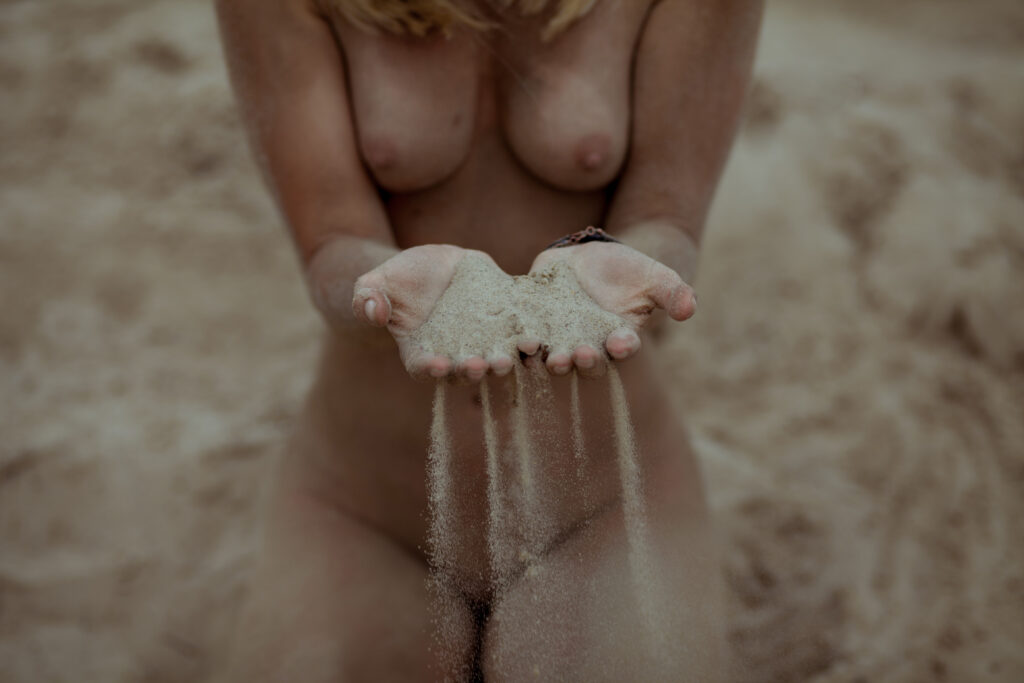
There is a temptation, when writing about such things, to slide into either the leering or the therapeutic. The Mediterranean resists both. It offers, instead, something stranger and more durable: a momentary suspension of the long European argument with the body, that argument we have been conducting since at least Augustine, with intermissions for the Renaissance and the occasional Romantic poet. Its sun and sea and sand have inspired artists and dreamers for centuries, but nude bathing here offers something more profound, a sense of lightness, of shared humanity, of utter freedom.
Perhaps this is why people return, season after season, to the same cove, the same patch of dune, the same small ritual of folding clothes upon a stone. They are not, finally, after a tan or a thrill. They are after a brief reprieve from the costume of modernity, with its endless requirements of self-presentation. The fine art of being naked in the Mediterranean is, in the end, less about undressing the body than about undressing the fears that clothe it, a small spiritual exercise as much as a physical one, an act of letting go and of living, however briefly, as one truly is beneath the sun.
The sea, indifferent and patient, has seen it all before. It will see it again tomorrow, when the light returns to that particular hour, and someone, somewhere along this immense and ancient coast, will once more step out of their clothes and into a kind of memory.
Images: Photo session of a naked girl in the sand in summer. Sashe form PxHere.