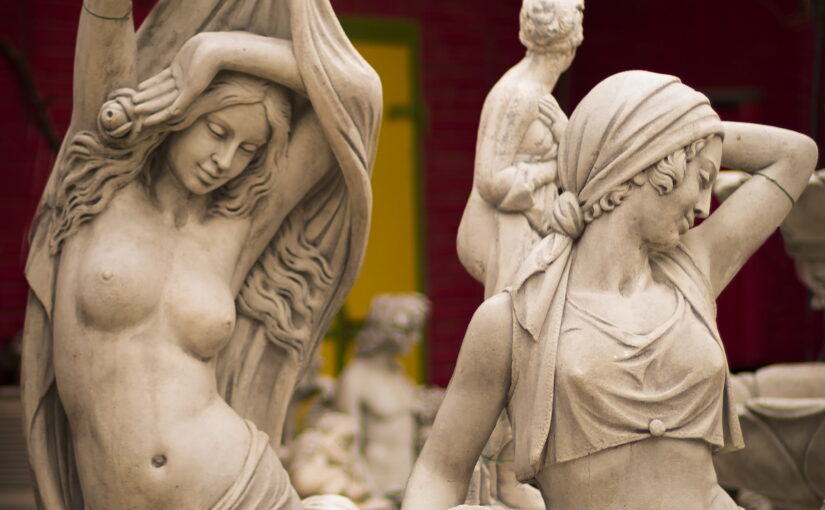
There is a particular hour in the Mediterranean autumn, when the heat has loosened its grip but the light still falls thick as honey, in which one can almost believe that nothing has changed since antiquity. A man bends over an olive tree. A woman lifts a basket of figs onto a low stone wall. Somewhere a bell rings, calling no one in particular. It is in this hour, more than in any museum, that the region remembers itself.
The harvest festival, in its many Mediterranean iterations, is the formal expression of that remembering. To call it a celebration of food is to mistake the surface for the substance. Food, here, is merely the pretext. What is actually being marked is something older and more strenuous: the long, uncertain bargain between human labor and the indifferent generosity of the soil. For thousands of years, this bargain has produced anxiety, gratitude, song, and finally ceremony. The ceremony persists, even when the anxiety has been outsourced to supermarkets.
The Mediterranean basin, cradle of agriculture and of so much else, was among the first places where human beings learned to wait for things to grow. The earliest farming communities of the Neolithic, scratching at the warm earth between ten thousand and four and a half thousand years before our era, lived at the mercy of seasons they could not yet name with confidence. Their festivals were not entertainments but insurance policies, drawn up with the gods. Offerings were placed before deities of fertility in the hope that the following year might be no worse than the last. By the Bronze Age, in the painted halls of Minoan Crete and along the Nile, these gestures had grown into processions, banquets, and choreographed acts of public gratitude. The Iron Age refined them further: the Greeks gave their thanks to Demeter, the Romans to Ceres, and both surrounded the giving with athletic contests, theatrical performances and ritual sequences that welded agricultural necessity to civic identity. The Mediterranean, then as now, possessed an inimitable talent for transforming work into pleasure without quite forgetting that it was work.
Climate dictated the calendar. Long, parched summers and mild, generous winters pushed the festivities toward the equinoxes, toward the hinges of the year when something visibly ended and something else, with luck, began. The harvest was understood as a gift, and a gift, anthropologists remind us, always demands a return. The return took the form of ritual.
Of these ancient rituals, the Greek Thalysia possesses a quiet, almost agricultural elegance. It fell in the month of Pyanepsion, that hesitant interval we now call October or November, and it was offered chiefly to Apollo, though Demeter, Artemis and Dionysus all received their share of attention according to local custom. The name itself comes from thalysion, meaning the first-ripe, the inaugural yield. Whatever the field gave first, the gods received first. Grains, fruits and vegetables were laid before the images of the deities, and loaves baked from the new corn, the thalysion arton, were carried through the celebrations like edible proofs of survival. Demeter, whom the poets liked to call the goddess with the great loaves, presided over this bread with maternal seriousness.
Pausanias, that indefatigable traveller of late antiquity, recorded a small miracle in Boeotia: the first fruits placed before Demeter Mycalessia were said to remain fresh throughout the year, as though time itself had been politely asked to wait. One does not need to believe the story to admire the longing it expresses. Theocritus, in a more lyrical mood, prayed simply to plunge his winnowing shovel once more into the goddess’s heap of corn, imagining her smiling, sheaves and poppies in hand. Whether on the mainland or on the smaller islands, on threshing floors or under olive trees, the Thalysia gathered its people in that double posture peculiar to the Mediterranean: half-kneeling in devotion, half-reclining at the table.
The gods, of course, have largely retired. Demeter no longer receives her loaves, Apollo no longer accepts the first sheaf. And yet a stubborn continuity remains, visible to anyone who has stumbled, by accident or design, into a village square in October. The names have changed; the gestures have not. Across Italy, southern France, Greece, Malta, the Maghreb and the Levant, autumn fills with feasts dedicated to particular crops: the olive, regal and slow; the artichoke, that thistle redeemed by Italian patience; the grape, around which an entire civilization has organised its melancholy.
These contemporary festivals are not, despite the marketing, mere folkloric reenactments. They have become quietly serious affairs, sustaining small farmers against the unforgiving arithmetic of industrial agriculture, defending varieties of fruit and grain that a more efficient world would happily forget. In the olive groves of Umbria, in the artichoke fields of Sardinia, in the Maltese gardens scented with citrus and rosemary, one encounters something that resembles resistance dressed as celebration. The hashtag and the chef’s collaboration have arrived, certainly; the festival now has an Instagram account and a tasting menu. But beneath the curated photogenia, the essential gesture is unaltered. Something has been grown. Something has been gathered. Someone says thank you, in public, with wine.
This is, perhaps, what the modern visitor senses without being able to name: that these gatherings are among the last unembarrassed performances of gratitude in European life. The secular West has grown shy of thanksgiving, suspicious of any sentiment that cannot be ironised. The Mediterranean harvest festival, with its garlands and its long tables, simply ignores the embarrassment. It belongs to an older grammar, in which the proper response to abundance is neither anxiety nor calculation but a temporary, communal extravagance.
There is, too, a quieter argument embedded in all this. In an age of industrial monoculture and supermarket logistics, the insistence on local, seasonal, often inconvenient produce becomes something close to an ethical position. Each artichoke feast and olive blessing is a small dissent from the placeless food economy, a reminder that the Mediterranean’s ecosystems are not décor but inheritance. Climate change has lent these festivals a sharper edge: what was once celebration now carries a faint note of vigilance, even of mourning, for landscapes that may not survive the century in their present form.
Still, the dominant register remains joy, and the joy is unsentimental. To watch the threshing of grain in a Cretan village, or to hear the slightly out-of-tune brass band that always seems to materialise at the edge of an Italian piazza on the evening of the olive blessing, is to understand that the harvest festival is not really about harvest at all. It is about the willingness of a community to interrupt itself, to gather around the small fact of a fruit, and to declare, with sufficient food and a little wine, that another year has somehow been managed.
The gods may have gone home. The first fruits, in some form, are still being offered.
This list includes major annual harvest festivals in the Mediterranean region, focusing on autumn wine, olive, and food celebrations. Note: Dates for 2026 are based on recurring annual schedules.
🍇 Wine & Grape Harvest Festivals
- Bozcaada Grape Harvesting Festival (Turkey – September): A traditional festival in early September where grapes are brought to the town square by tractors and donkeys, featuring concerts, wine tastings, and the Miss Grape beauty pageant. Website: GoTürkiye
- Festa dell’Uva in Impruneta (Tuscany, Italy – Late September): Located in the heart of Chianti Classico, this historic festival (starting 1926) features lavish parade floats, music, and wine tasting, culminating in a celebration of the grape harvest. Website: Festa dell’Uva Impruneta
- Denizli Grape Harvest Festival (Turkey – Early September): Focused on the Çal region, this festival celebrates local producers with dance shows, concerts, and wine-tasting. Website: GoTürkiye
- Expo Chianti Classico (Greve in Chianti, Italy – September): An annual event in the heart of Tuscany’s wine country offering tastings, guided tours, and local food. Website: WineTourism.com
- Roman Grape Harvest ((annual September event). Website: turismoroma.it
- The Moussem l3nab (Grape Festival) is a vibrant annual agricultural celebration held in Benslimane, Morocco, typically during the month of August.
🫒 Olive Harvest & Oil Festivals
- 11th Mediterranean Olive Oil & Table Olive Festival (Crete, Greece – April 24-26, 2026): A major professional and agricultural fair held at the International Exhibition Centre of Crete, highlighting new harvesting technology and olive products. Website: Olive Oil Festival
- Frantoi Aperti (Umbria, Italy – Oct-Nov): “Open Mills” allows visitors to visit olive mills to taste fresh extra virgin olive oil, paired with food markets and festivals over five weekends. Website: Frantoi Aperti
- Corfu Olive Harvest Experience (Greece – October): An immersive festival where visitors take part in hand-picking olives in Arillas, culminating in witnessing the pressing of the oil. Website: Instagram
- Expoliva 2026 (Jaén, Spain – May 2026): Recognized as the world’s largest olive oil trade fair, celebrating Spanish production. Website: Expoliva Jaén
- Timechret uzemur is an olive harvest festival celebrated in the Kabylia and Aures regions of Algeria, specifically around December 7th.
🌰 Food & Seasonal Harvest
- Zigante Truffle Days (Livade, Croatia – Oct-Nov 2026): Held over five weekends to celebrate the white truffle harvest, featuring auctions and tastings in the Motovun Forest. Website: Zigante Tartufi
- Chestnut Festival (Arcadia, Greece – October): An autumn celebration of the region’s chestnuts. Website: Cycladic Spaces
- Ermioni Pomegranate Festival (Greece – Late October): A celebration of the local pomegranate variety, featuring local food, sweets, and liqueur.
- Fiera Nazionale del Marrone (Cuneo, Italy – Oct 17-19, 2026): A major Italian festival focused on the chestnut, known as the “autumn jewel”. Website: Marrone Cuneo
- The Moussem Tamrat is a Moroccan date harvest festival celebrated in October, marking the vital date palm harvest season. It is part of traditional agricultural fairs (“moussems”) where communities celebrate, trade, and exchange products, often featuring vibrant souks for selling produce, scarves, and jewelry. Website: Life in Morocco
- The Moussem Louzat (Almond Blossom Festival) is a vibrant annual celebration held in Tafraoute, in the heart of Morocco’s Anti-Atlas Mountains, usually during the second week of February. While sometimes called a harvest festival, it primarily celebrates the blooming of the almond trees, which transforms the region into a stunning landscape of white and pink blossoms. Website: Wanderlust Magazine
- Sukkot is a major Jewish festival known as the “Festival of Booths” or “Tabernacles,” which takes place in the autumn to celebrate the harvest and commemorate the 40 years the Israelites spent wandering in the desert. The festival lasts for seven days in Israel and eight days in the Diaspora. In 2026, Sukkot begins at sundown on Friday, September 25, and ends at nightfall on Friday, October 2 (extending to October 3 or 4 for those observing the adjacent holidays of Shemini Atzeret/Simchat Torah in the Diaspora). Website: My Jewish Learning
- Shavuot is a major Jewish holiday celebrated 50 days after Passover (in late May or early June) that marks the end of the barley harvest and the beginning of the wheat harvest in Israel. Known as the “Festival of Weeks,” it also celebrates the biblical giving of the Torah at Mount Sinai. Website: Rabbi Danya Ruttenberg Facebook
🍽️ Culinary Events
- Taste the Mediterranean Festival (Mali Lošinj, Croatia – Sept 11-14, 2026): A high-profile culinary gathering where chefs celebrate indigenous products and Mediterranean cuisine. Website: Taste the Mediterranean
- Alaçatı Herb Festival (Turkey – April 20-26, 2026): A culinary competition and festival celebrating Aegean herbs, accredited by Worldchefs. Website: WorldChefs